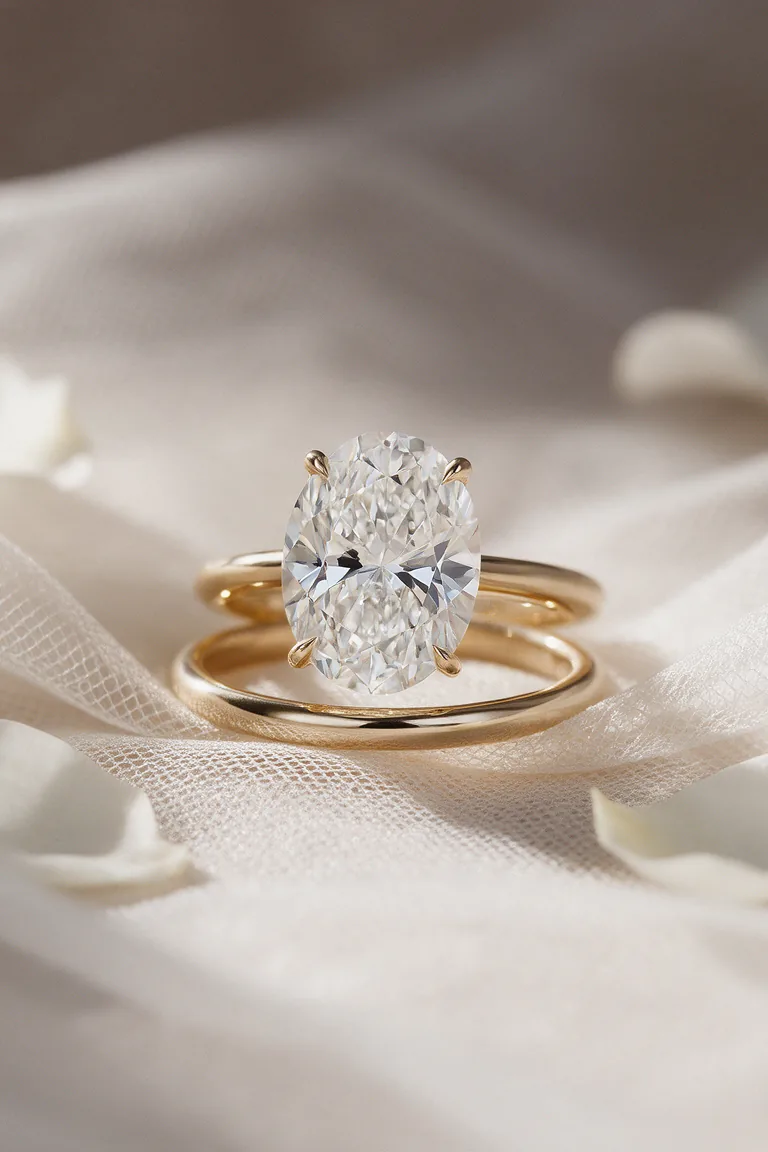
A ring should slide over the knuckle with a little resistance and sit comfortably without spinning. Here is how to find that size without leaving home.
Method 1: measure a ring that already fits
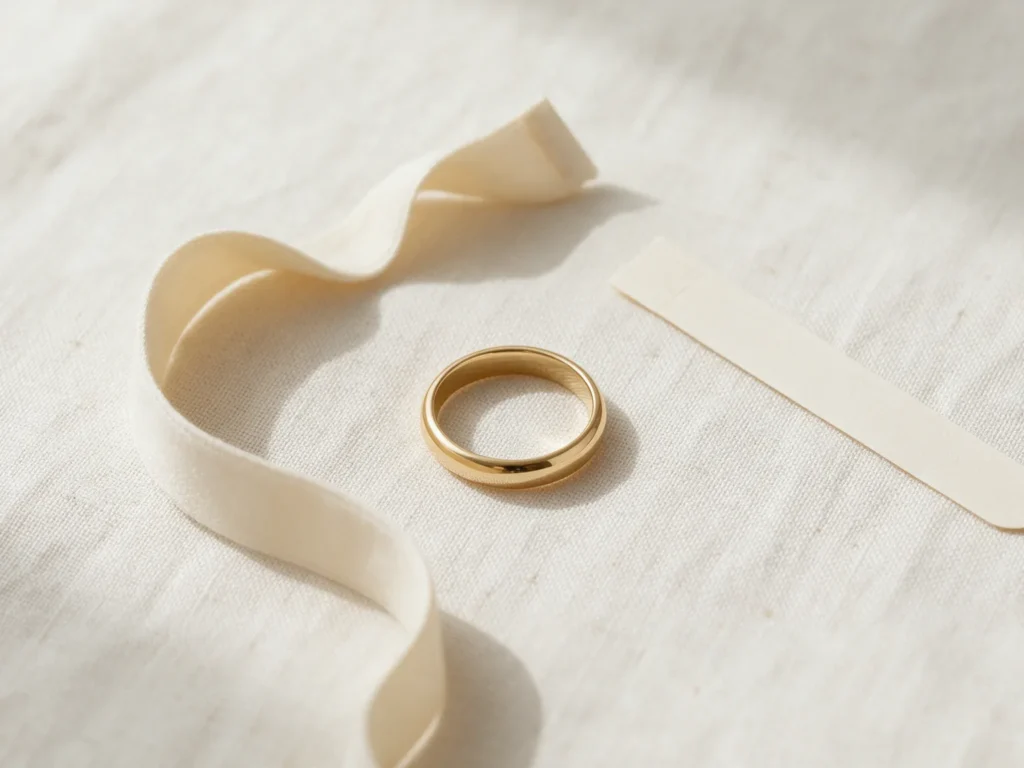
This is the most reliable method. Choose a ring that fits the intended finger well, lay it flat on a ruler, and measure the inside diameter in millimetres, from inside edge to inside edge. Note it down, along with which finger it is worn on.
Method 2: the paper strip
Cut a thin strip of paper, about 5 mm wide. Wrap it around the base of the finger, snug but not tight, and mark where it overlaps. Lay it flat and measure the length in millimetres: that is the circumference. Check that the loop would still slide over your knuckle.
Method 3: a ring sizer
A plastic ring sizer, the kind that works like a small belt, is inexpensive and more accurate than paper. If you are buying from the house and are unsure, ask us and we will help you size it properly.
Five things that throw the measurement off
- Temperature. Fingers shrink in the cold and swell in the heat. Measure at room temperature.
- Time of day. Fingers are often slightly larger in the evening, so measuring later in the day is safer.
- The knuckle. If your knuckle is larger than the base of your finger, size for the knuckle so the ring can pass over it.
- Band width. Wide bands fit more snugly than thin ones. For a band wider than about 6 mm, consider going up half a size.
- The other hand. Your dominant hand is usually a little larger. Measure the hand the ring will be worn on.
Sizes differ by country
Ring sizes are written differently around the world: letters in the UK, numbers in the US, and the inside circumference in millimetres across much of Europe. Millimetres work everywhere, so if you send us your measurement in millimetres, we will match it to the right size.