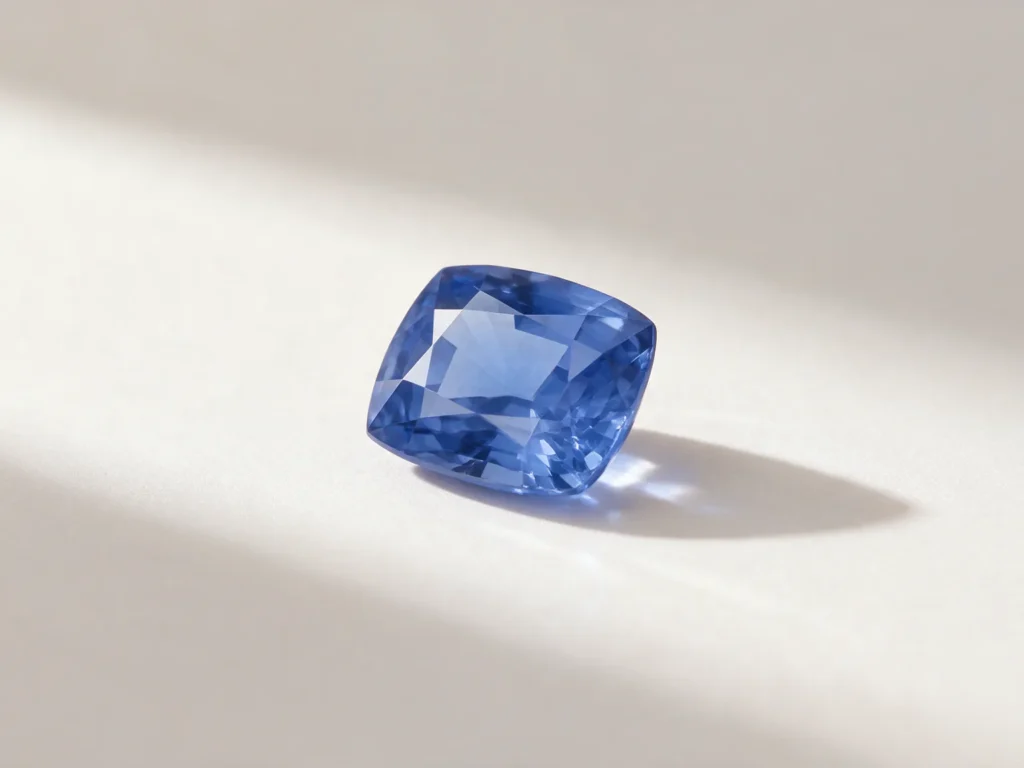
Sapphire belongs to a mineral family called corundum, which is simply aluminium oxide. Pure corundum has no colour at all. Everything you love about a blue sapphire comes from tiny traces of other elements that found their way into the crystal as it grew.
The chemistry, briefly
Blue appears when both iron and titanium are present. Light passing through the stone sets off an exchange between them, and that exchange absorbs the warm end of the spectrum, leaving the blue we see. A little more iron pushes the colour darker and inkier; the balance between the two is what separates a cornflower blue from a midnight one.
Change the trace element and you change the stone. Chromium turns corundum red, and red corundum has its own name: ruby. Yellow, pink, green and the famous pink-orange padparadscha are all sapphires too.
What to look for
- Hue: the colour itself. Pure, saturated blues are the most sought after.
- Tone: how light or dark. Too dark and the stone looks black by candlelight; too light and it looks washed out.
- Saturation: how vivid. Greyish or greenish undertones lower it.
“Heated”: what the label means
Many sapphires are gently heated after mining to improve their colour and clarity. It is a long-established, stable and widely accepted treatment, and a heated sapphire stays the colour it is. Unheated stones of fine colour are rarer and priced accordingly. What matters is that you are told. When a sapphire in the house has been treated, the listing says so.
Living with a sapphire
Sapphire is a 9 on the Mohs scale, second only to diamond among popular gemstones, which makes it a wonderful choice for a ring worn every day. Clean it as you would gold: warm water, mild soap and a soft brush. Our five-minute care ritual covers the rest.