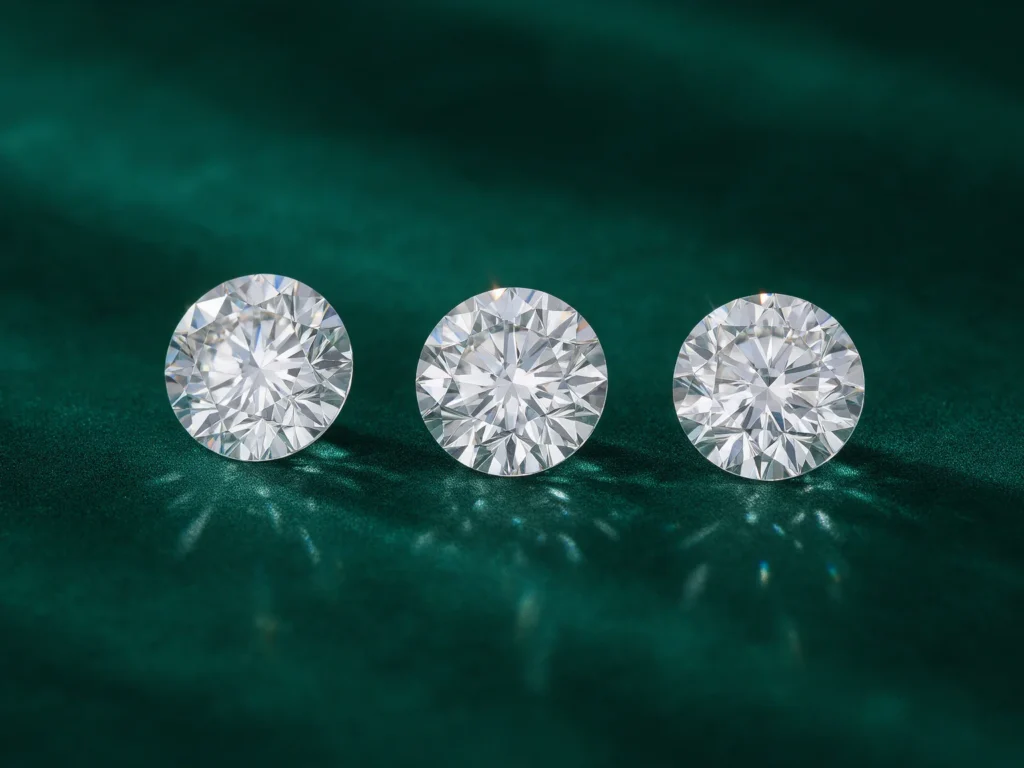
Across a dinner table, a natural diamond, a lab-grown diamond and a moissanite can look almost the same: bright, white, full of light. Up close, and on paper, they are three different things. You deserve to know which one you are wearing, so here is the plain version.
Natural diamond
A natural diamond is carbon that crystallised deep in the earth, under enormous heat and pressure, a very long time ago, and was later carried to the surface and mined. It is the hardest natural material, a 10 on the Mohs scale, which is why it keeps its polish for generations. Part of its value is rarity and origin: no two formed in quite the same way.
Lab-grown diamond
A lab-grown diamond is also diamond: the same carbon, the same crystal structure, the same hardness and sparkle. The difference is where it grew. It is made in weeks rather than formed over ages, using one of two methods, known as HPHT and CVD. You cannot tell the two apart with the naked eye or a loupe; a gemmological laboratory uses specialist equipment to do it. Lab-grown diamonds usually cost considerably less than natural ones of the same size and quality.
Moissanite
Moissanite is not a diamond at all. It is silicon carbide, and almost all of it is made in a laboratory today. It is very hard (9.25 on the Mohs scale), so it wears well, and it bends light differently from diamond: it shows more coloured flashes, often called fire. Some people love that rainbow; others prefer the cooler, whiter sparkle of diamond. Neither is wrong.
So which should you choose?
- Choose natural if rarity, origin and long-term value matter most to you.
- Choose lab-grown if you want real diamond, and a larger or finer stone for your budget.
- Choose moissanite if you love its fire and want brilliance at the gentlest price.
How we label them
Every piece in the house names its stone plainly: natural diamond, lab-grown diamond or moissanite, never a vague “diamond-like” stone. If a listing ever leaves you unsure, ask us. We will tell you straight, and we will never be offended by the question.