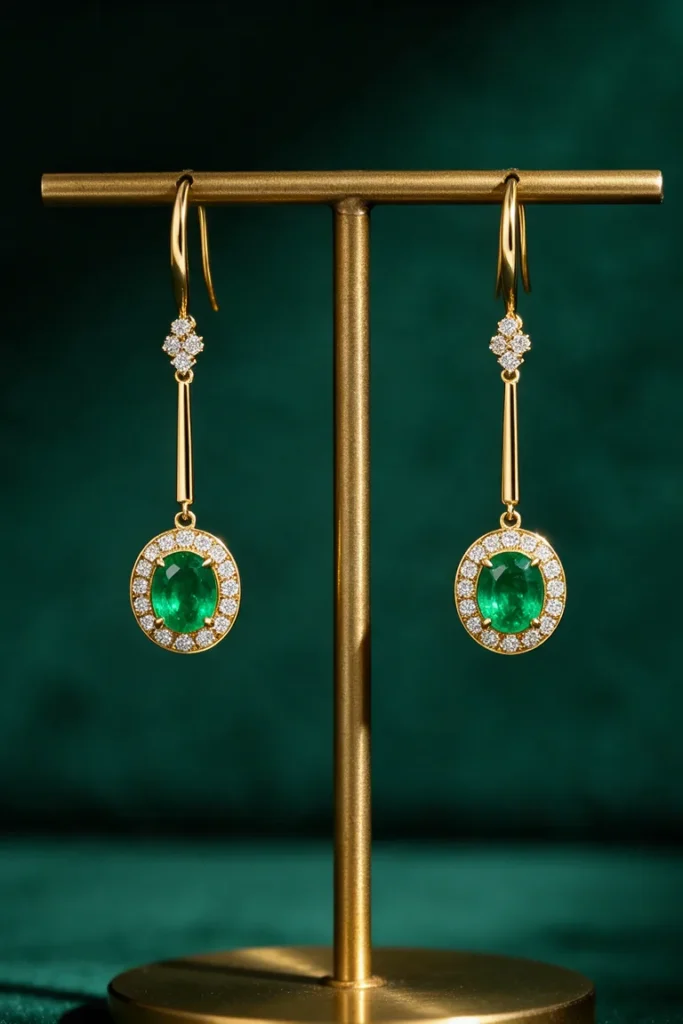
The emerald is the green member of a mineral family called beryl. Its colour comes from traces of chromium, vanadium, or both, and at its best it is a deep, glowing green that no other stone quite matches.
The garden
Look closely at almost any natural emerald and you will see tiny inclusions: wisps, fissures and crystals trapped as it grew. Jewellers call them the jardin, French for garden. They are a normal part of the stone’s character. An emerald with no visible inclusions is extremely rare, and one that looks too perfect deserves a question.
Most emeralds are treated, and that’s fine if you’re told
Because of those fine fissures, most emeralds are filled with oil or resin after cutting to improve their clarity. It is a long-standing practice and widely accepted. The amount varies from minor to significant, and the more a stone has been treated, the more gently it should be cared for. A good jeweller will tell you about it. The house will.
What to look for
- Colour first. With emeralds, colour matters more than clarity. A vivid, evenly saturated green is the prize.
- Life. A fine emerald seems to glow from within rather than look dark or glassy.
- Cut. The emerald cut, a rectangle with stepped, bevelled corners, was developed partly to protect this stone and show off its colour.
Wearing an emerald
Emerald measures 7.5 to 8 on the Mohs scale: hard enough for regular wear, but more prone to chipping than sapphire or diamond. It shines in earrings and pendants, and in a ring with a protective setting. Clean it with a soft, damp cloth only: no soaking, no ultrasonic or steam cleaners, and no harsh chemicals, which can disturb the oil. Our care guide has more.
Emerald is also the birthstone for May.